Minnesota 6th congressional district
MN-6 · 119th Congress (2020 Census) · 734,184 residents · Federal money here
Where MN-6 sits in Minnesota
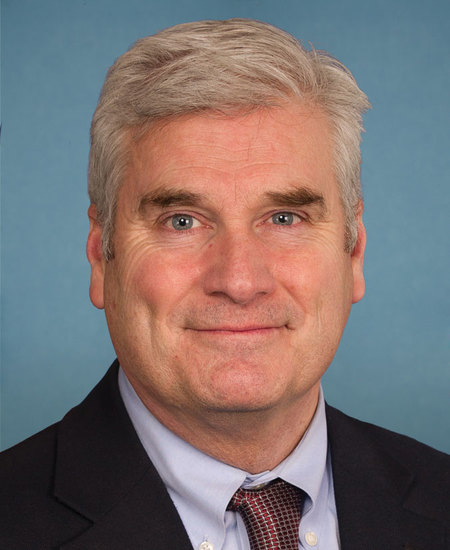
Current representative
Tom Emmer
Republican · holding this seat since 2015
Recorded votes
Yea 4,123Nay 2,068
of 6,355 roll calls across their career.
Government experience
- House · MN-62025–2027
- House · MN-62023–2025
- House · MN-62021–2023
- House · MN-62019–2021
- House · MN-62017–2019
- House · MN-62015–2017
Where their votes land
Where the money came from
Receipts into Tom Emmer’s own campaign committee over the 2025–2026 election cycle, through July 22, 2026.
What these categories mean
- Small individual donors
- People whose giving stayed under $200 in total. The FEC does not require them to be named, so who they are is genuinely unknown — not merely unlisted.
- Large individual donors
- People whose giving passed $200, which is the point at which the campaign must report their name, employer and occupation.
- PACs
- Political action committees — corporate, trade, union and ideological. Money from an organisation rather than from a person.
- Transfers in
- Money moved in from another committee the candidate is authorised by, typically a joint fundraising committee.
- Other and unclassified
- The remainder once every category above is accounted for: federal funds, offsets, interest, and anything this site could not classify. It is a residual, not a kind of donor.
This is money the campaign itself received. It is not everything spent to win the seat. It excludes leadership PACs, and it excludes independent expenditures and other outside spending — money spent to elect or defeat a candidate by groups they may not lawfully coordinate with, which in a contested race can exceed everything shown above. It is not personal income or net worth, which are a separate filing altogether. Figures are as filed with the Federal Election Commission and are only as current as the last report, covering through July 22, 2026; a cycle still running is a partial count. Check this filing on fec.gov.
Personal finances
Separately from the campaign money above, Tom Emmer files a report about their own money: what they own, what they owe, what they earn outside Congress, and every stock trade they make. The law requires it, and every figure in it is a range rather than an amount — which is why the columns below are ranges too.
Latest figures — Measured on this ground since they took the seat
Click one of the figures to see how it has changed over time.
- Population734,184▲ up 8.7%2010-2014 → 2020-2024redrawn
- Median age37.6 yrs▲ up 4.7%2010-2014 → 2020-2024redrawn
- Median income$104,536▲ up 47.6%up 11.4% after inflation2010-2014 → 2020-2024redrawn
- Poverty rate6.7%▼ down 1.4 pp2010-2014 → 2020-2024redrawn
- Child poverty rate6.9%▼ down 1.9 pp2010-2014 → 2020-2024redrawn
- Unemployment rate3.4%▼ down 2.8 pp2010-2014 → 2020-2024redrawn
- Unemployment (BLS)3.9% allocated▼ down 0.4 pp2014 → 2025redrawn
- SNAP receipt5.8%▼ down 0.5 pp2010-2014 → 2020-2024redrawn
- Gini index0.408▲ up 4.5%2010-2014 → 2020-2024redrawn
- Median home value$364,400▲ up 87.8%up 41.8% after inflation2010-2014 → 2020-2024redrawn
- Median gross rent$1,264▲ up 49.6%up 12.9% after inflation2010-2014 → 2020-2024redrawn
- Cost-burdened renters45.9%▼ down 4.4 pp2010-2014 → 2020-2024redrawn
- Homeownership rate80.4%▼ down 0.3 pp2010-2014 → 2020-2024redrawn
- Housing vacancy rate4.3%▼ down 2.0 pp2010-2014 → 2020-2024redrawn
- Uninsured rate3.7%▼ down 2.5 pp2010-2014 → 2020-2024redrawn
- Disability rate9.8%▲ up 1.0 pp2010-2014 → 2020-2024redrawn
- Overdose deaths12.4 per 100k allocatedno earlier figure2022-2024
- Child mortality38.3 per 100k allocatedno earlier figure2020-2024
- Low birth weight6.6% allocatedno earlier figure2020-2024
- Teen births2.9 per 1k▼ down 73.8%2010-2014 → 2020-2024redrawn
- Bachelor's+35.7%▲ up 7.6 pp2010-2014 → 2020-2024redrawn
- No internet3.9%▼ down 7.2 pp2013-2017 → 2020-2024redrawnearliest
- Firearm deaths8.6 per 100k allocatedno earlier figure2020-2024
- Injury deaths61.6 per 100k allocatedno earlier figure2020-2024
- Crash deaths8.1 per 100k allocatedno earlier figure2020-2024
- GDP$43.3B allocated▲ up 49.0%up 12.6% after inflation2015 → 2024redrawnearliest
- GDP per person$57,563 allocated▲ up 37.6%up 3.9% after inflation2015 → 2024redrawnearliest
- Covered jobs274.5k allocatedno earlier figure2024
- Weekly wage$1,193 allocatedno earlier figure2024
- Income per person$69,163 allocated▲ up 48.6%up 12.3% after inflation2015 → 2024redrawnearliest
- Businesses19.0k allocatedno earlier figure2024
Each arrow is the latest published figure against the newest one published before Tom Emmer took this seat, with the two periods named beside it. A rate moves in percentage points; every other indicator is shown as a share of where it started, and a dollar figure also by how much it moved after inflation, with both figures restated in the same year’s dollars. A row marked redrawn is one whose district lines moved between the two figures: they describe different ground, so that change belongs to the seat number rather than to a fixed piece of land. A row marked earliest had nothing published before they took the seat, so it is measured from the first figure there is — a window that starts inside their tenure rather than at the beginning of it. These are conditions in the district, not a record of the member. Nothing here is evidence that they caused any of it, or that a different representative would have produced different numbers.
Child poverty rate over time, 2005-2009 to 2020-2024
Share of people under 18 living below the federal poverty level.
| Period | Child poverty rate | Margin of error | Congress |
|---|---|---|---|
| 2005-2009 | 7.1% | ± 0.4% | 111th |
| 2006-2010 | 7.4% | ± 0.4% | 111th |
| 2007-2011 | 7.8% | ± 0.5% | 112th |
| Lines redrawn for the 113th Congress — figures above and below describe different areas.2008-2012 | 8.3% | ± 0.5% | 113th |
| 2009-2013 | 8.7% | ± 0.5% | 113th |
| 2010-2014 | 8.8% | ± 0.5% | 114th |
| 2011-2015 | 9.1% | ± 0.5% | 114th |
| 2012-2016 | 8.6% | ± 0.5% | 115th |
| 2013-2017 | 8.4% | ± 0.5% | 115th |
| 2014-2018 | 8.3% | ± 0.5% | 116th |
| 2015-2019 | 7.9% | ± 0.5% | 116th |
| 2016-2020 | 7.0% | ± 0.5% | 116th |
| 2017-2021 | 7.2% | ± 0.5% | 116th |
| Lines redrawn for the 118th Congress — figures above and below describe different areas.2018-2022 | 6.9% | ± 0.5% | 118th |
| 2019-2023 | 6.3% | ± 0.5% | 118th |
| 2020-2024 | 6.9% | ± 0.5% | 119th |
Summed from the sex-by-age detail of table B17001 (under-5 through 16-17, both sexes, below and at/above poverty).
Who represented this district
Every member who held MN-6, grouped by the stretches over which these lines stayed the same. The groups break where the chart above breaks, because the members either side of a redraw represented different ground.
| Member | Party | Years | Lines in force |
|---|---|---|---|
| Michele Bachmann · 2 terms | Republican | 2009–2013 | 111th–112th Congresses |
| Lines redrawn for the 113th Congress — figures above and below describe different areas.Michele Bachmann | Republican | 2013–2015 | 113th–116th Congresses |
| Tom Emmer · 4 terms | Republican | 2015–2023 | |
| Lines redrawn for the 118th Congress — figures above and below describe different areas.Tom Emmer · 2 terms | Republican | 2023–present | 118th–119th Congresses |
Party is the party held during that term, not the member’s party today. A stretch ends where the district was redrawn: the members either side of a break represented different ground, so the seat number is the only thing they have in common. Nothing here says a member caused any figure on this page to move. Source: unitedstates/congress-legislators.